

Intro
In the last two weeks, markets have digested a second Fed rate cut, a cooling job market, and new inflation data that signal a delicate economic balancing act. Meanwhile, global diplomacy, shifting tax rules, and growing corporate concentration in AI continue to define the evolving financial and business landscape. Let’s dive in!
ClariVise Insights
- Fed Policy Easing: The Federal Reserve cut interest rates for the second time, lowering the benchmark rate to 3.75%-4%, and will end balance sheet reduction in December. These moves aim to reduce borrowing costs and may enhance investment opportunities amid economic uncertainty.
- Social Security COLA: The Social Security cost-of-living adjustment (COLA) for 2026 is 2.8%, raising average monthly retirement benefits by about $56. This inflation-based increase highlights the importance of factoring COLA and inflation adjustments into comprehensive retirement income planning.
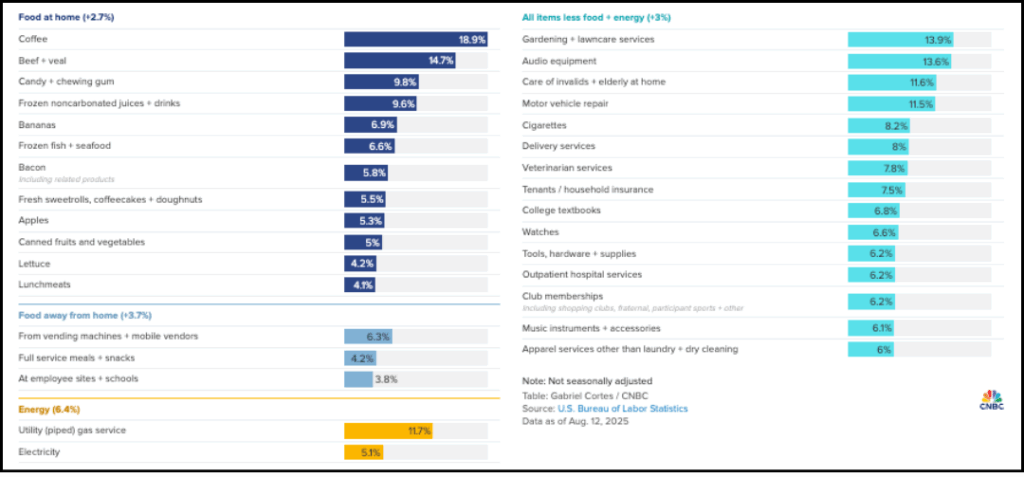
- September Inflation: The Consumer Price Index increased 3% year-over-year in September, up from 2.9% in August but below expectations. Gasoline prices jumped 4.1% month-over-month, while core prices excluding food and energy also rose 3%, reflecting continued inflationary pressures.
What Else is in the News
- Inherited IRA Changes: Starting in 2025, certain non-spouse heirs must take annual RMDs from inherited IRAs over a 10-year period or face a 25% IRS penalty. Proper planning is essential to optimize distributions, avoid steep penalties, and manage tax impacts during the wealth transfer.
- Private Sector Growth: Private sector employers added an average of 14,250 jobs per week over the past four weeks, indicating steady employment gains. This sustained job growth can support consumer spending and contribute to economic stability amid recent labor market uncertainties.
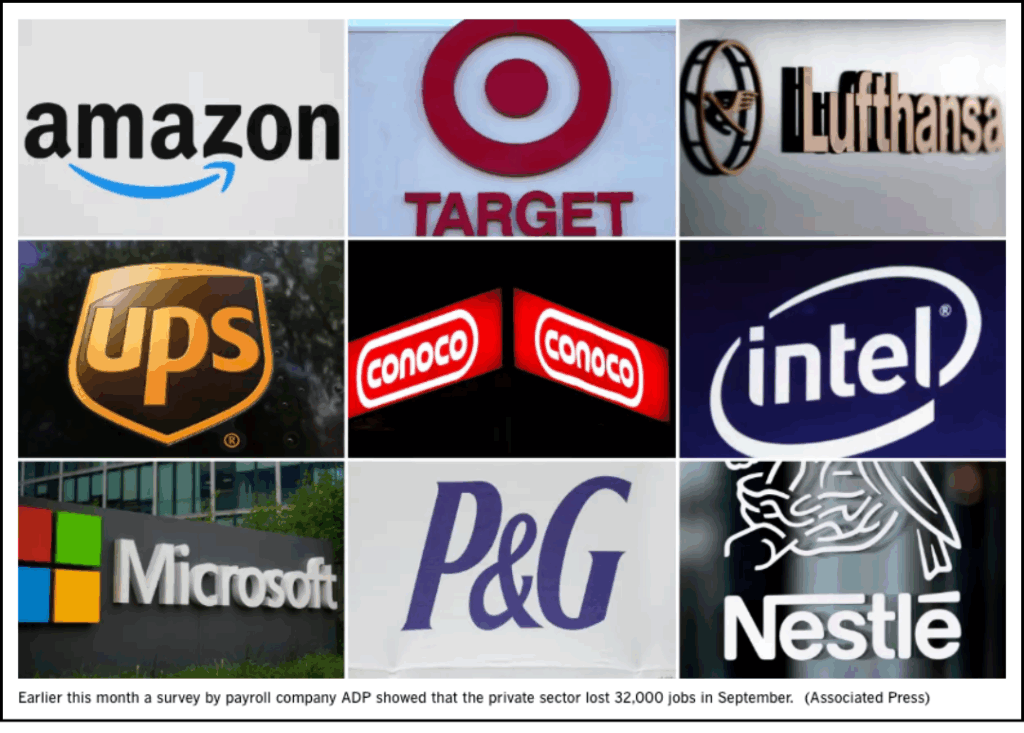
- Job Cuts Update: Despite some reports of employment gains, several major companies are announcing significant layoffs amid economic uncertainty and cost pressures. Amazon (14,000 jobs), UPS (48,000 jobs), Target (1,800 jobs), Nestlé (16,000 jobs), Lufthansa (4,000 jobs), Novo Nordisk (9,000 jobs), ConocoPhillips (up to 3,250 jobs), Intel, Microsoft, and Procter & Gamble are actively reducing workforces.
- Holiday Tariffs Impact: Tariffs on imported goods, including seasonal items like artificial Christmas trees, are expected to raise consumer prices this holiday season. Analysts estimate that if these tariffs had been in place in 2024, they would have added about $40.6 billion in costs, or roughly $132 per consumer.
- Trade Truce: Presidents Trump and Xi agreed to a one-year pause on China’s rare earth export controls, avoiding a deeper trade war. The deal includes tariff reductions, postponed U.S. restrictions on Chinese firms, expanded agricultural trade, and cooperation on port fees and technology issues.
- Candy Warehouse Bankruptcy: Right before Halloween, CandyWarehouse.com filed for Chapter 11 bankruptcy, citing liabilities of $1M–$10M against assets under $500K. The company aims to restructure under Subchapter V, with a court hearing set for Oct. 29 to decide ongoing operations.

Earnings Spotlight
Planning Points
Understanding S&P 500 Concentration Risks
The S&P 500 index has become increasingly concentrated, with five technology giants (Nvidia, Microsoft, Apple, Alphabet, and Amazon) now comprising nearly 30% of the total index value. This concentration highlights that investing solely in the S&P 500 may expose portfolios heavily to the performance and risks associated with a small group of technology focused companies.
- The index’s market-cap weighting means that as these companies grow, they carry more influence on overall returns.
- While this reflects the growing importance of AI and technology in the economy, it also shifts traditional diversification assumptions that may have worked previously.
- Investors with retirement or taxable portfolios primarily in the S&P 500 should be aware that their returns are more correlated with the success of these few firms.
- Balancing portfolios with other asset classes or strategies may help address risks inherent in high concentration, although diversification needs vary by individual circumstances.
To learn more, watch our recent videos on this topic. Eric further explains the rise in S&P 500 concentration, and Brandon discusses how alternative investments can help bring balance to your portfolio.
Summary
In the next two weeks, markets will turn their focus to key economic updates including the October Consumer Price Index (CPI) and retail sales reports, which will offer clues about inflation and consumer strength heading into the holiday season. Geopolitically, attention will remain on U.S.–China trade follow-ups and ongoing Middle East negotiations, while Washington faces mounting pressure to resolve the government shutdown.
Footnotes
- Fed cuts rates for the second time this year, will end balance sheet run-off in December (CNBC)
- Social Security Administration announces 2026 COLA benefit increase of 2.8% — what it means for you (CNBC)
- Heres the inflation breakdown for September 2025 — in one chart (CNBC)
- Inherited IRAs have a key tax change for 2025. What to know to avoid a penalty of up to 25% (CNBC)
- Private sector created nearly 15,000 jobs a week over the past month, preliminary ADP data shows (CNBC)
- Layoffs are piling up, raising worker anxiety. Here are some companies that have cut jobs recently (AP News)
- Tariffs are expected to start showing up more in consumer prices as holiday shopping season starts (CNBC)
- The biggest takeaways from the Trump-Xi meeting — what the truce covers and what is still unclear (CNBC)
- Major Candy Company Files for Bankruptcy Just Days Before Halloween (Today)